
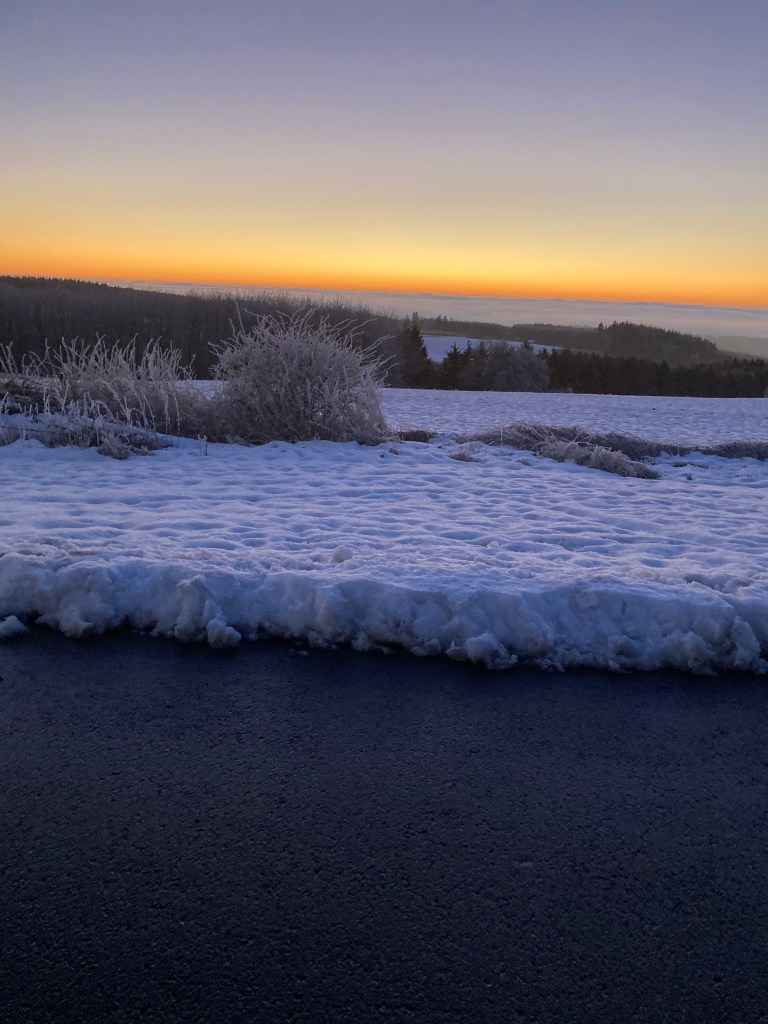
At the end of this first month of 2025, I was overwhelmed by sadness, not by the inauguration of a president, that was a given, but by how this event in the USA, took the news in a direction away from all that needs to have focus. Where the spotlight needs to shine, and where change must happen. A blind spot was created and the light rushed in where there should have been darkness.
I have grown up in a world of words; the written word in particular. When these are silenced and when we are no longer able to use our words to speak, to write and to read, we become invisible to the world. The words and actions of others, more powerful, begin to be heard and reverberate around us and through us.
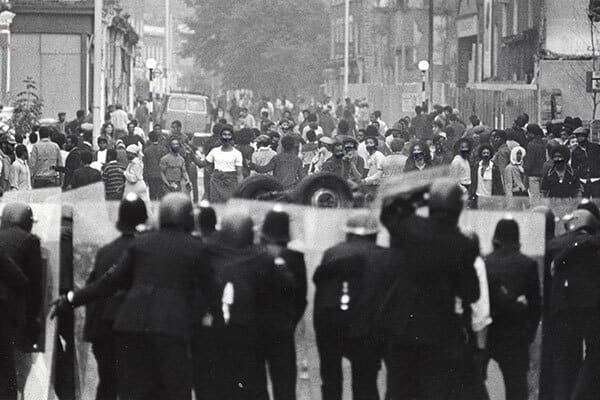
As a young adult, living and working in north London, the police would use the Sus laws, from section 4 of the Vagrancy Act of 1824, to stop, search and then arrest on suspicion of loitering with intent. This law was used in England and Wales in the 1970s, to harass, punish and brutalise black youth. The Scrap Sus Campaign was initially spearheaded by Mavis Best in South London and spread to the whole of the UK during this period. The written words within the Sus law were aimed at a particular sector of the population in the 1800s that Britain wanted unseen and unheard; permanently. The same was true in the 1970s and beyond.
When I moved to the other side of the Atlantic in the 1980s, repressive governments used their own laws to silence others, especially journalists.
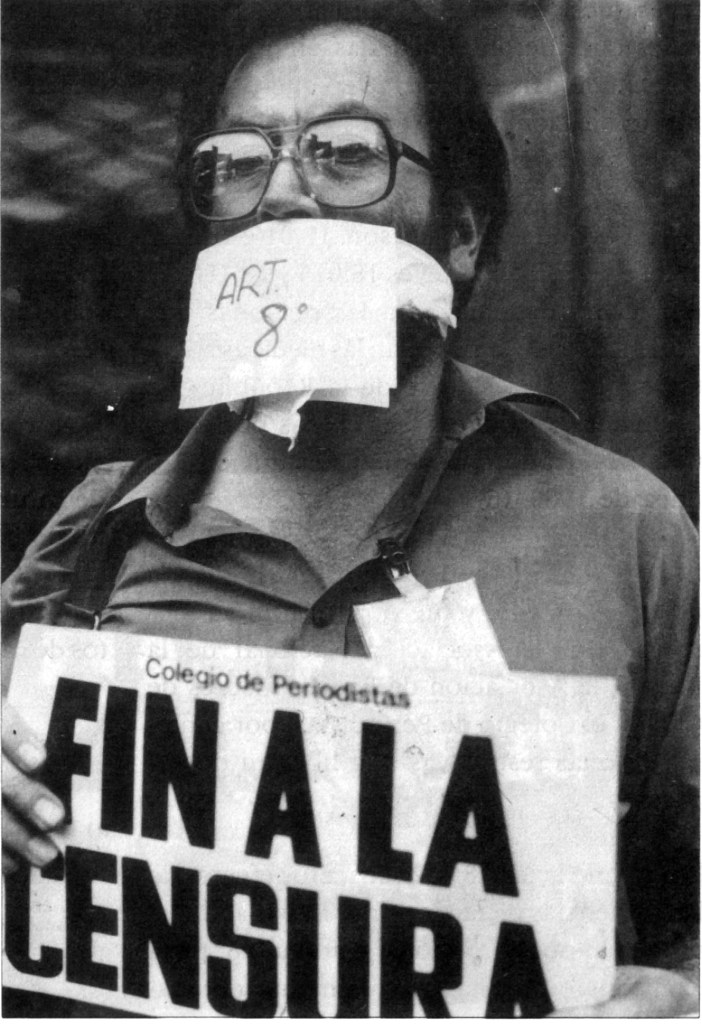
Photo of J. Munoz, member of the National Union of Journalists, Chile 1987
Fast forward, we find ourselves in this world under the grip of even more widespread laws, dictates and edicts that curtail our freedom to speak, to write and read the words of those who speak their truths.
We also live in a world where there is ever more access to the written word, the spoken word and those written in songs and chants, on walls, on placards and banners, online, on scraps of paper, on tombstones and even in the skin as permanent markers of a moment in time.
In this same moment, our words, especially those in English, are becoming more powerful and seen in the most remote places in advertisements. Ads that promote genetically modified seeds and pharmaceuticals banned elsewhere. Grocery stores that offer cheap food ‘stuff’ that will change the dietary habits and health of millions, forcing us all into a greater dependency on remedial health practices. Rather than lives lived to prevent the spread of disease in our bodies, we are caught in feeding the already bulging coffers of individual billionaires, now trillionaires, and companies that use their wealth to further control the way capital moves around the world, and into the hands of fewer and fewer.
In cities, towns, villages and in our homes, people are taking action, however small, towards what lies at the heart of our core beliefs around justice, connection, understanding and repair. There are movements growing out of all this chaos aimed at feeding ourselves, providing affordable housing, self-care, healing and educating in community and in recognition of our courageous ancestors who made way for us to be possible today. They were planting seeds not for their tomorrow but for a future they would not see, together.
Our connections, thoughts, ideas, wonderings and imaginations will help us grow roots, spread our spores underground in order to survive, as mushrooms have done for around 800 million years, connecting us to our ancestors who have shown us how to be in and with the world. We can because they did. We can be guided by the tides, the stars, our deep knowledge about rivers, earth, the land and fires that stoke the energy we need to put one foot in front of the other, every day. When all else seems to be crumbling around us, when the walls that held us safe and protected us are being blast open, it is our words, our language, our stories, our art that will survive.
“The way to right wrongs it to turn the light of truth upon them.”
Ida B. Wells
 Patricia Angoy
where do we shine the light? “A blind spot was created and the light rushed in where there should have been darkness”. I love this quote. When I open my news apps and see Congolese people running from blisters of fire and deafening bullets. Sudanese women committing suicide after being defiled by soldiers. Haunting and daunting images from Palestine. And then, the other side of the World, leaders watering hate even more—yet they get all the attention. I wonder what we have become as humans! As always, thank you for your input. Always spot on!!
LikeLike
When writing this, these were the images that came to mind and I don’t see any content on the big media outlets shining light on the plight of our sisters and brothers around the world. The lens does not focus on where it should. Thank you, always, for opening my own eyes and allowing me to see.
LikeLike
You always write words that give us such food for thought, Patricia.
Yes indeed, those who shout their empty words loudest, seem to garner the most attention. Calling out the ‘Disproportionate taking of Palestinian lives, in response to Hamas’ kidnapping of hostages on October 7th’ does not mean we are anti- semetic. It merely means we cannot tolerate seeing innocent children being brutally murdered in a conflict not of their making.
Keep writing Patricia and keep challenging our thinking, so voices like yours can be heard.
LikeLike
Thank you so much for the encouragement Michaela. This is a time for us all to act courageously and shine light on our truths. Thank you for your comments and insight.
LikeLike
Well said Pat. Also very pertinent in these times.
LikeLike
Thank you Michael
LikeLike
Good morning Patricia
Thanks for the blog. I really enjoy your reflections, and they challenge me to get jiggy with my own writing. As it turns out I have been asked by a friend who is the new editor of a weekly newspaper in Joburg called the Saturday Star (syndicated in the Durban sister paper apparently) to help him fill space with a column. It forces me to write every week, which is proving to be really challenging and very enjoyable. I just sent off this weekâs effort, and attach last weekâs for your enjoyment.
Iâm still waiting for a regular link that will allow peeps to follow at their own leisure.
Enjoy
A
https://www.iol.co.za/saturday-star/news/green-shoots-of-presidents-and-bishops-8f837d9d-088b-40fd-a1b6-22471db1b912
LikeLike
Firstly congratulations on your new column and its recognition of those with courage to speak their truth, as the Bishop did to the newly elected president of the USA. Thank you too for always reading my blog and making a comment for us all to muse on and take note of. When you chose a new Principal at Waterford Kamhlaba UWC in the throws of the pandemic in 2020, I am sure you did not think we would continue to exchange our views, thoughts and what is most urgent in our hearts, five years on and across two continents. Thank you Ashley.
LikeLike
Such a beautiful piece Patricia… so sad, yet at the same time shining a much needed light in these dark times. Thank you.
LikeLike
We are, indeed, in dark times. Thank you for your comment and also for being here.
LikeLiked by 1 person
Thanks for sharing your thoughts with us. We are indeed living in some trying times. My only hope is that people lift up their voices and bring to the forefront all the lies and hate that is circulating at this time. Many are powerless but with writers and educators like you, we will eventually be freed from injustices and oppression. Keep the pressure on.
LikeLike
Dearest Anne, thanks to you for sharing your wise words of hope “that people lift up their voices and bring to the forefront all the lies and hate that is circulating at this time”. There is also beauty in your final words of freedom. Thank you!
LikeLike