
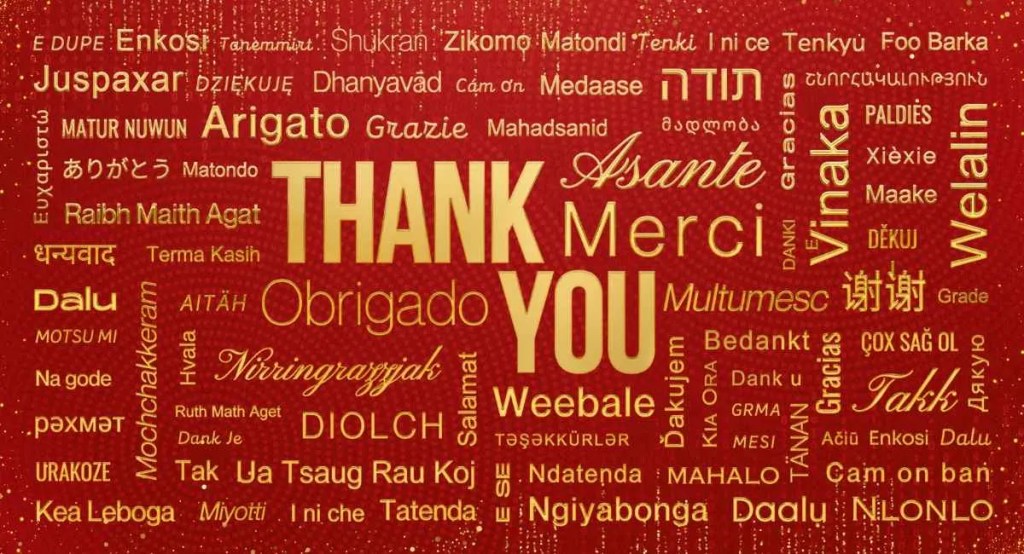
Is it English, Spanish, French or German? Perhaps Italian, Portuguese or Danish? These are all languages of the colonists; people who left their own lands in search of wealth and power, conquest and extraction. Once the colonists had taken what was given and, when that was not enough, removed by brute-force, gold, diamonds, bauxite, lithium, tobacco, sugar, rice and potatoes, chocolate and fine dyes, art, beautifully woven cloths, religious artefacts and medicines they left something that we now take for granted; their language.
Language that was forced upon us, replaced that which had existed for millennium, in many cases, long before the invasion of the European. This is now the language I write, read and speak. More importantly it is the language in which I think, imagine and create. My own ancestral languages were lost many hundreds of years ago, or are they?
This month I was honoured to present the opening plenary at the 2026 IATEFL (International Association of Teachers of English as a Foreign Language) in Brighton, UK where I explored the role of the English language – the coloniser – in our teaching in international schools today. To prepare for the conference I interviewed several students, colleagues, artists and scientists; focussing on the thoughts and ideas of four. Each one of them has grown up under the cloud of colonisation and the stealth of non-western, colonial languages in favour, in this case, of English.
In teaching English to speakers of other languages, often performance in the language takes precedence over our multiple responsibilities, and we fail to consider the weight language places on the learner, too often erasing the intergenerational nature of culture and our ways of being in the world with others. The following are some of the questions I pose.
- How, then, can we avoid the coloniality of language when English is the language of the coloniser?
- How do we break down the barriers that separate the hierarchies in our teaching systems and places of work?
- How do we teach through the language, about the language and with the language so that we open worlds and not shut them down?
However, in times of social upheaval, oppressive regimes and cultural appropriation there is now an explosion of creative expression. Non-western languages can thrive and are being revived. Still, their value as a way of transmitting culture is in danger of being lost to the occidental values and beliefs now promoted. New forms of thinking are emerging. Young people are imagining their futures, now.
Cultures in which dialogue, deep thinking, adaptation and re-orientation take the stage, they survive and thrive, even under cataclysmic change. New ways emerge and old languages take on a variety of forms of expression, signally different ways forward.
We all hold language in our hands, as Toni Morrison so eloquently signals in her Nobel Prize acceptance lecture in 1993. Since the future of language, all languages, is in our hands we have a responsibility. Now what will we do with it?
Imagine what is possible!


There are so many wrong things with English. Name itself! There is something odd about learning someone’s language. Even more odd when the language was shoved down your throat. Learning or ‘knowing’ English is almost a must now! Whether you aspire to leave your country or even stay in, your measure of eloquence or success, is how ‘proficient’ you are with English language. Instead of calling someone who can speak and write English well smart, especially if they are not English, we should call them [us], the “well colonized people”. Because that is the truth. How else would you explain being so eloquent in someone’s language when we can’t even hold a 2 minutes conversation in other languages without twisting our tongues and bending it to the will of English?
LikeLike
So agree with you, Francisco. We are so well colonised but we are more than that too. We are uniquely able to engage in this conversation, together with millions of others. Thank you, always.
LikeLike
Dear Patricia, your presentation made me grateful that despite modern pressure I was intentional raising my daughter to first know her mother tongue siSwati. The English followed thereafter and it was always a good laugh hearing her and her friends try to speak English because it became a unique combination of both languages e..g “come dlala with tsine” – “come play with us” and many other combinations that made us smile. Eventually around 6 years it pans out and becomes proper full English sentences but I really treasure those transition moments when they are young. Thank you for shining the spotlight on this conversation and once again congratulations on your amazing presentation at IATEFL well done!
LikeLike
Thank you so much, Celiwe, for your input into my presentation. Your points were validated by so many other who feel similarly. It was such an honour for me to try and share your thoughts, ideas and experiences.
LikeLike
Thank you, Patricia. Most of us take language for granted, and if I am correctly interpreting your message, you are pointing out the harm such lack of awareness can cause, because language has consequences. My view is that in reality, language is noise, sound, a disturbance of the silence, and when humans assign subjective meaning to the sounds, they become “words”. This inherent pseudosubstantive nature of words is perhaps what Toni Morrison was getting at, and resonates with your closing encouragement. A proof of this that amuses me is that dogs can learn what all these sounds are and learn to assign meaning, but my dog surely won’t understand Mandarin. I once had a sociology professor who asked his students to begin using “shopping cart” as an exclamation of approval, as in “That new car is so shopping cart!” The language is in our hands. On the one hand, it’s only sound, but these sounds only make sense between two people if they agree on what they mean. Money is just paper, silver, gold, or plastic, but once we agree on its value, it becomes an exchange medium. So I guess the good news is that language, being completely empty of inherent meaning, is malleable and can be influenced for better and for worse.
LikeLike
It is always interesting to have a variety of views on this blog. Happy that you were encouraged to share your thoughts. Thank you
LikeLike